
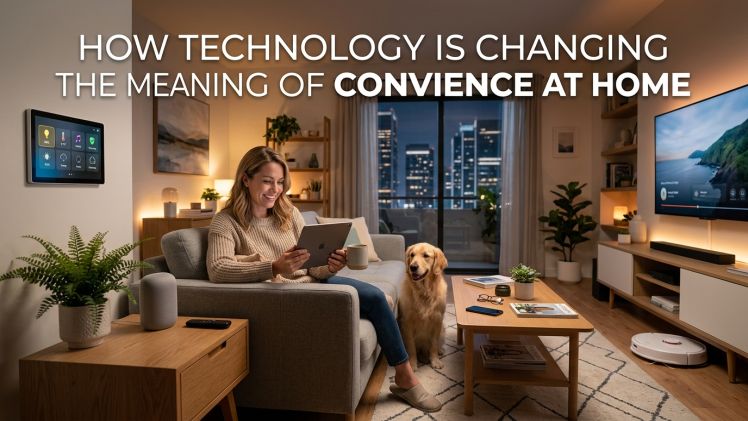
For me, inconvenience at home is rarely one big problem. It is usually ten small things happening one after another.
The shirt I want to wear is creased. Breakfast is getting late. I still need to make something for lunch. The blender jar is in the sink. There is a wire getting in my way somewhere. And suddenly, a normal weekday morning feels like a small project.
That is why my idea of convenience has changed. Earlier, I thought a convenient appliance was simply one that did a job faster. Now, I think convenience is more about how little attention a task needs from me.
Technology at home is slowly moving in that direction too.
I Do Not Just Want Faster. I Want Less Fuss
There is a difference between saving five minutes and making something easier to live with. I noticed this while doing very ordinary household work.
Take ironing. A regular iron already makes the job faster than doing anything manually, so speed is not really the problem. For me, the irritation usually comes from the cord twisting around the board, pulling at the iron or getting in the way when I turn a shirt.
That is where something like a cordless steam iron makes sense to me. The Wipro Elato 2-in-1 Cord Plus Cordless Steam Iron, for example, can work in both corded and cordless modes. It also supports vertical and horizontal steaming.
The useful part is not simply that technology has been added to an iron. It is that the design is trying to remove one small irritation from a very familiar job. And that, to me, is what modern convenience should actually do.
The Kitchen Is Where I Notice This Change the Most
Cooking is probably the easiest place to see how our expectations have changed. On a busy day, I do not always want a separate pot for boiling, another one for steaming and another appliance for a quick meal. I mostly want to get food ready without turning the kitchen upside down.
That explains why appliances such as the multicooker have become interesting. The Wipro 1.5L Multi Cooker Kettle can handle jobs such as boiling and steaming, along with simple everyday cooking. I like the thinking behind that.
The technology is not asking me to cook differently just for the sake of using a new feature. It is trying to bring several familiar tasks together.
Convenience Now Means Fewer Steps
This is probably the biggest difference I see. A convenient appliance today should remove steps. If I can cook something without watching it every few seconds, that helps. If one appliance means fewer utensils to wash, that helps too. If controls are simple enough that I do not need to open the manual every time, even better.
None of these things sounds revolutionary on its own. But together, they make the day easier.
Small Appliances Are Becoming More Personal
Another thing I have noticed is that home appliances are becoming much more connected to individual routines. Not everyone wakes up and makes the same breakfast anymore.
Somebody wants a smoothie. Somebody wants fruit and oats. Somebody else wants chutney for breakfast. And on another day, nobody has more than five minutes to prepare anything.
That is where a compact nutri blender starts fitting into a lifestyle rather than simply sitting in the kitchen as another machine.
For example, the Wipro Elato Countertop Blender comes with two jars, including a smoothie jar, and has a compact countertop design. It also uses sensor technology with an automatic shut-off function.
What stands out to me here is not the number of features. It is the fact that the appliance is designed around a quick, small-batch way of preparing food. That matches the way many of us actually eat on working days.
Smart Technology Does Not Always Have to Look Smart
When people talk about technology at home, I sometimes imagine screens everywhere, apps for everything, and appliances constantly sending notifications. But I am beginning to think the most useful technology is often much quieter.
It can be a sensor that stops a motor when needed. It can be an appliance that switches between two ways of working. It can be better temperature control. It can simply be a product designed so that I have fewer things to manage.
That kind of technology does not demand attention. It gives some attention back. And I think that is a much better measure of convenience.
My Home Still Needs Me, Just Not for Every Little Thing
I do not expect technology to run my entire home. I still want to decide what I cook, how I organise things and what routines work for me.
What I do want is less time spent dealing with unnecessary friction. I do not want to fight with a wire while ironing. I do not want three different appliances out for three small cooking jobs. I do not want a simple morning drink to create a sink full of utensils.
Technology becomes genuinely useful when it understands these everyday annoyances.
Convenience Is Becoming More About Mental Space
For me, the biggest change is this: convenience is no longer only about doing things faster. It is about thinking about them less.
When an appliance makes a task simpler, needs fewer steps or fits naturally into an existing routine, it leaves a little more mental space for everything else happening in the day.
That might sound like a small benefit. But when home life is already full of small jobs, small decisions and small interruptions, removing even a few of them can make a real difference.
Maybe that is where home technology is heading next. Not towards doing everything for us, but towards making everyday life feel slightly less demanding.