
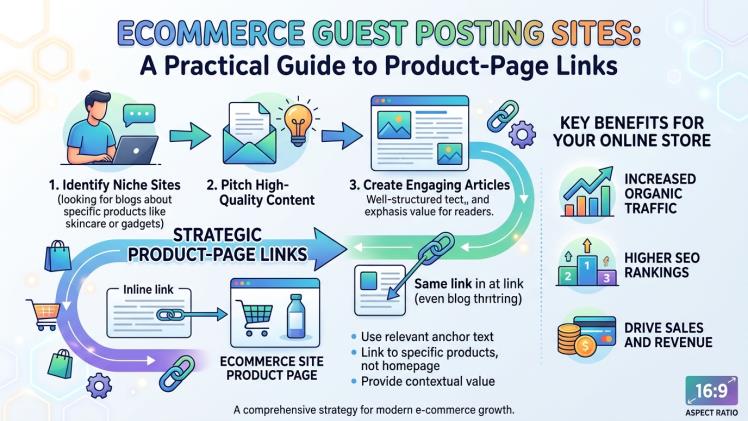
For an online store, visibility is not only about getting a homepage to rank. Shoppers often arrive through a specific product or category page, so those pages need to be easy to discover and useful once visitors land. Ecommerce guest posting sites can help retailers earn relevant links and introduce their products to new audiences, but the best results come from a thoughtful plan rather than a high volume of posts.
Why links to store pages matter
Search engines use links as one signal when assessing how pages relate to one another and how useful they may be. A link from a relevant publication can also send readers directly to a product or category they may want to explore. These benefits are different: a link may bring referral visitors even when its effect on search rankings is difficult to measure.
Many businesses focus link-building efforts on the homepage because it is the most familiar destination. However, a category page can better match an article about a particular type of product, while a product page may be appropriate when the article discusses that exact item. Directing links to the most relevant destination makes the reader’s next step clearer.
What makes a guest-posting site a good fit?
A publication is not valuable simply because it accepts submissions. Before pitching, check whether its audience overlaps with your customers and whether its existing articles demonstrate real editorial care. Look at the topics it covers, the quality of its writing, how recently it has published, and whether readers can find useful information beyond promotional content.
- Audience relevance: The site regularly serves readers who may care about your product category or expertise.
- Editorial standards: Articles are well-edited, specific, and written to inform rather than to host a list of links.
- Contextual fit: Your proposed subject can naturally include a useful reference to a store page.
- Credibility: The publication has a consistent identity and a genuine body of content.
These checks help distinguish a meaningful editorial opportunity from a page created mainly to sell placements. A useful overview of ecommerce link building for product and category pages can help retailers consider how destination pages fit into a broader backlink strategy.
Choose the right page before pitching
Start with the page you want readers to visit. A category page is often a sensible destination if it offers a range of options and helps shoppers compare products. A product page may work when the article’s subject closely matches one item and the page contains clear descriptions, pricing, availability, and practical details.
Before seeking a link, make sure the destination is ready. It should load well on mobile devices, explain what is being sold, and make the next action easy to understand. If the page is thin, confusing, or out of date, a link may bring visitors without giving them a reason to stay.
Pitch an article that earns attention
Effective guest posts begin with a reader’s question, not with a request to insert a link. A retailer selling kitchen equipment, for example, might offer a guide to choosing cookware for a small household. A store focused on outdoor clothing could explain how to layer garments for changing weather. The article should be complete and useful even for someone who never clicks through.
Research the publication before sending a pitch. Suggest a topic that adds something to its existing coverage, provide a concise outline, and explain why its readers may care. If a store page is a natural source for a specific recommendation, mention it without forcing the reference into unrelated copy. Editors are more likely to consider contributions that respect their readers and house style.
Keep link building measured and useful
Guest posting is one part of a wider approach, not a shortcut around strong pages or good customer service. Track which publications send engaged visitors, which landing pages perform well, and whether the article continues to attract readers over time. Do not judge success only by the number of links acquired. Relevance, referral traffic, and the quality of the destination all matter.
Small ecommerce teams may also need help with research, writing, outreach, or other marketing tasks. Understanding the freelance digital marketing meaning can clarify the range of work a specialist might handle. Osdire, for example, is a marketplace where businesses can hire freelancers across marketing and many other categories; clearly defining the task and approving the delivered work helps keep a project focused.
A sustainable approach
The strongest ecommerce link-building plans connect useful editorial content with pages that genuinely help shoppers. Choose publications for their audience and standards, pitch ideas that answer real questions, and link to the most relevant destination. With consistent attention to quality, guest posts can support discovery while giving readers something worthwhile in return.