
Master Combat in Online Gaming

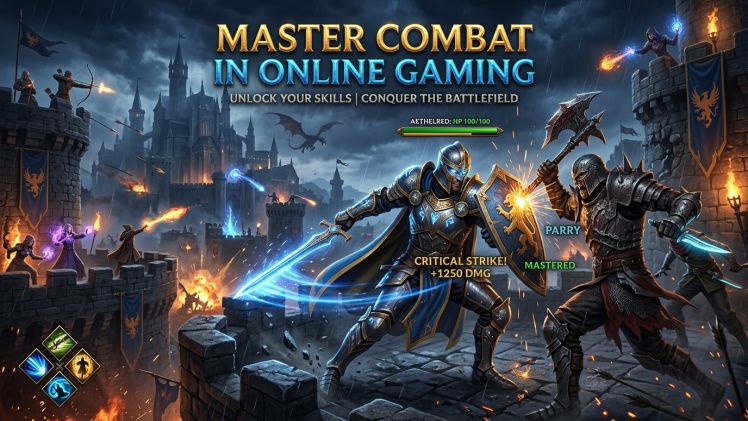
Mastering combat in online gaming requires more than fast reactions or powerful equipment. Successful players learn to read situations, manage resources, understand opponents, and make decisions under pressure. Whether a game focuses on close-range battles, tactical shooting, role-based abilities, or team encounters, combat skill develops through practice and awareness. A strong foundation begins with understanding mechanics, movement systems, attack patterns, defensive options, and timing windows. Players who improve these areas can become more confident competitors, and platforms such as agb99 can add another place to explore online gaming experiences.
Understand Your Combat System
Every online game has its own combat language. Weapons may have different ranges, damage values, recoil patterns, cool-downs, or recovery times. Characters may also possess unique strengths and weaknesses that determine how they should approach a fight. Spend time learning these details instead of relying entirely on instinct. Training areas, practice matches, and casual games let you experiment without the pressure of ranked competition. Understanding exactly what your character or equipment can do makes decisions faster when opponents create unpredictable situations.
Improve Movement and Positioning
Movement often determines who controls a battle. Standing still can make you an easy target, while careless movement can expose you to unnecessary attacks. Learn when to advance, retreat, strafe, crouch, jump, or reposition. Good positioning gives you useful cover, better sight-lines, and more escape options. Before starting an engagement, consider nearby obstacles, alternate routes, and possible enemy positions. Strong players rarely enter a fight without thinking about what happens if their first attack fails. Positioning matters even more in team games because one player’s location can affect everyone nearby.
Develop Better Aim and Timing
Accuracy improves when practice is deliberate. Instead of simply playing long sessions, focus on weaknesses such as tracking moving targets, controlling recoil, landing critical hits, or reacting to sudden threats. Short, focused practice can produce better results than repetitive matches without reflection. Timing matters as much as precision. Attacking too early can waste an opportunity, while waiting too long may allow an opponent to recover. Learn the rhythm of common attacks, defensive abilities, reloads, and cool-downs so you can recognize moments when an enemy is vulnerable.
Read Your Opponent
Combat becomes easier when you identify patterns. Many players develop habits, such as retreating after taking damage, using a defensive ability when pressured, or approaching from the same route. Watch for these behaviors and adjust your strategy. Don’t assume one successful prediction will work forever, because skilled opponents can change their behavior. Instead, gather information continuously. Pay attention to movement, resource usage, positioning, and previous engagements. The goal is not to guess randomly but to make increasingly informed decisions based on evidence.
Manage Resources Wisely
A fight can be lost before the final exchange if you manage resources poorly. Ammunition, health, armor, stamina, abilities, equipment, and cool-downs all influence combat potential. Avoid wasting valuable resources simply because they are available. At the same time, saving everything for a perfect moment can be equally harmful. Learn the value of each resource and understand when spending it creates an advantage. Strong resource management lets you stay dangerous throughout an extended match rather than becoming ineffective after one intense encounter.
Communicate With Your Team
In team-based games, individual mechanical skill is only part of combat mastery. Clear communication can transform ordinary players into an effective unit. Share useful information about enemy locations, missing opponents, available resources, and planned attacks. Keep messages brief and specific so teammates can act quickly. Good communication also includes listening. If teammates provide valuable information, use it to adjust your positioning and priorities. Coordinated attacks often succeed because players combine their abilities and timing rather than fighting independently.
Learn From Every Defeat
Losses provide valuable information when you analyze them honestly. After a difficult match, identify the moments that changed the outcome. Did you engage from a poor position? Did you use an important ability too early? Did you ignore an enemy pattern? Did impatience cause unnecessary risks? Avoid blaming teammates or luck for every failure. External factors can matter, but focusing on controllable decisions helps you improve faster. Reviewing game-play recordings can help.